Middle school year 2 · sixth unit
Animals and Energy
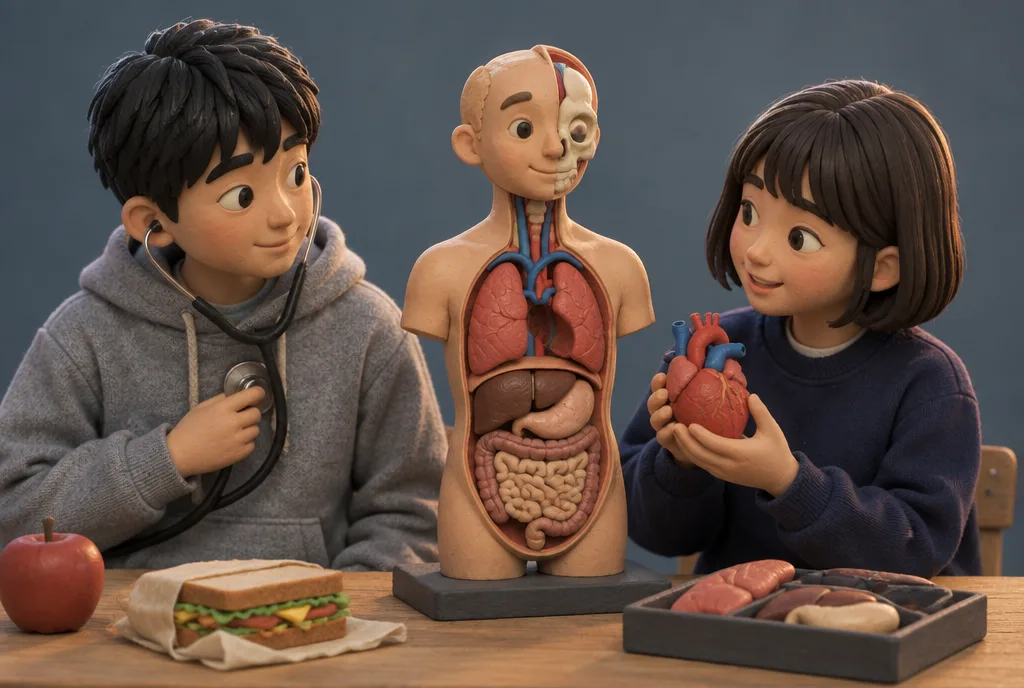
We eat and breathe to send nutrients and oxygen to every cell and get energy from them. Follow it through the body: food broken down, carried round in the blood, and the leftovers filtered out.
Chew rice for long and it tastes sweet
A board to arrangeWhere does what we eat turn into what? Drag the food to the mouth, the stomach and the small intestine.
Blood takes about a minute to go once round the body
A board to adjustBy what route? Take the red blood cell and drag it along the vessels.
The lungs have no muscle
A board to adjustSo how do they swell and shrink? Take the gold handle and pull the rubber sheet down.
The kidneys filter 180 litres of fluid from the blood a day
A board to arrangeYet only about 1.5 litres of urine is made. Where does the rest go? Drag the five things found in blood into groups.
What to take away from this unit
- Digestion breaks big nutrients into pieces small enough to absorb. Starch becomes glucose, protein becomes amino acids, fat becomes fatty acids and monoglycerides, and they are absorbed through the villi of the small intestine.
- Circulation is the heart sending blood round the body. In the pulmonary circuit blood takes on oxygen; in the systemic circuit it gives oxygen and nutrients to the cells. The heart has two atria and two ventricles.
- Breathing takes in oxygen and gives out carbon dioxide in the lungs. The diaphragm and ribs move to change the volume of the chest cavity, and air goes in and out.
- Excretion removes the wastes left after cells have used nutrients. In the kidneys, filtration, reabsorption and secretion make urine.
- The four work together. The circulatory system carries nutrients from the digestive system and oxygen from the respiratory system to the cells, which get energy from them (cellular respiration). The wastes produced are carried back by the circulation to the excretory and respiratory systems.